Wondering what to do when your lettuce bolts? This beginner-friendly guide on how to save lettuce seeds walks you through exactly what to do once your lettuce sends up a flower stalk. If you’ve already grown lettuce and want to collect seeds for future gardens, this step-by-step guide keeps it simple and stress-free.
If you’ve grown lettuce before, you may have seen it suddenly change. Instead of staying low and leafy, the plant shoots up a tall stalk, the leaves turn bitter, and it no longer looks like something you want to harvest.
This site contains affiliate links. If you make a purchase using one of these links, I may earn a commission. Please see my disclosure page for more information about cookies collected and our privacy policy.
This is called bolting. Bolting happens when lettuce shifts from growing leaves to producing flowers and seeds, usually as days get longer and temperatures warm. It’s a natural part of the plant’s life cycle—even though it often feels like something went wrong.
If your lettuce has bolted, you might be wondering if it’s time to pull it out and move on. But if you’ve ever wanted to save seeds, this is actually the moment to stop and let the plant keep growing.
This guide walks you through exactly what to do once lettuce bolts, so you can save your own lettuce seeds easily.
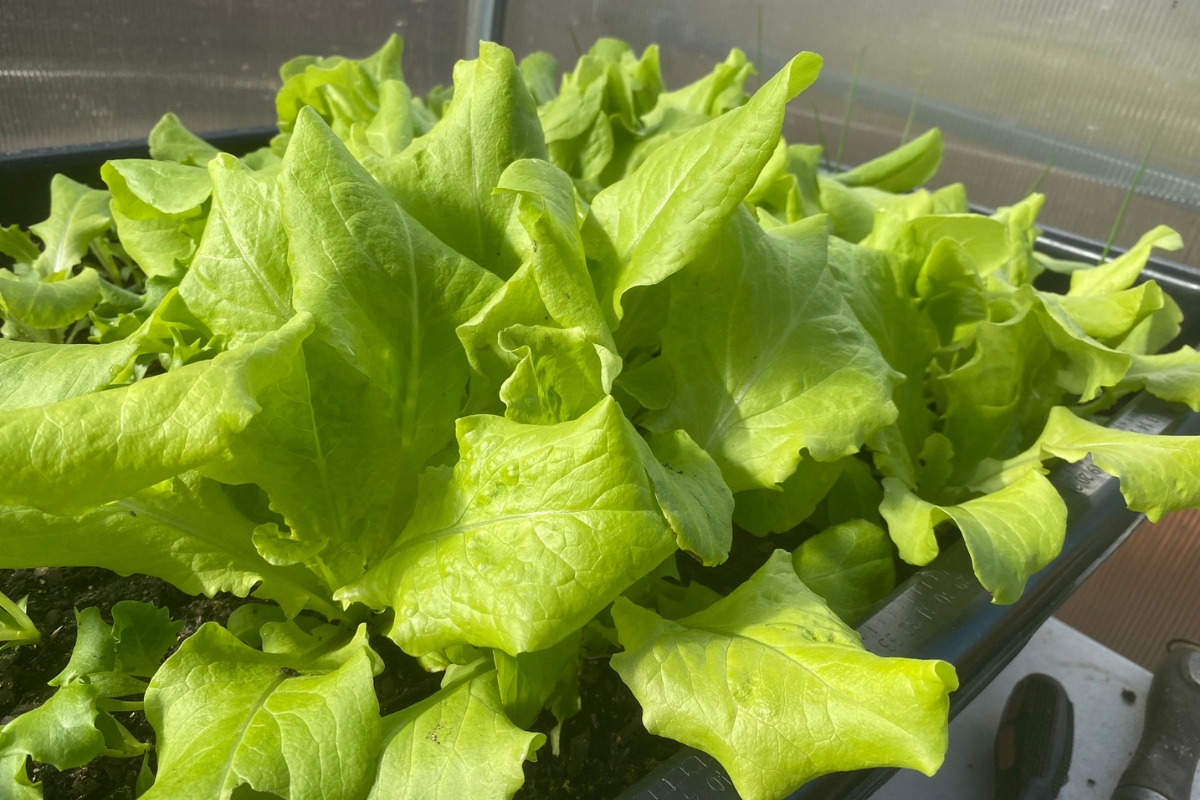
Step 1: Don’t pull bolted lettuce — this is how seed saving starts
Once lettuce bolts, it’s finished producing good leaves, but it’s just getting started with seed production.
That tall central stalk is what eventually produces flowers and seeds. While the leaves will be bitter and no longer good for eating, the plant itself is still healthy and useful.
If your instinct is to pull it out, pause. This plant still has one more job to do.

Step 2: Decide which lettuce plants to keep
If you planted more than one lettuce plant, you don’t need to save seeds from all of them. One lettuce plant will give you a TON of seeds– so choose your favorite varieties to save from.
For a home garden, you can save seed from just one healthy plant. If you have the space, letting a few plants go to seed gives you more seed to work with, but it isn’t required.
Choose plants that grew well for you and didn’t struggle with disease. If you only have one lettuce plant left, that’s still perfectly fine.
Step 3: Keep caring for the plant as it grows taller
Bolted lettuce still needs basic care.
Continue watering during dry periods and keep weeds from competing around the base of the plant. You don’t need to give it special treatment—just don’t abandon it completely.
As the seed stalk grows taller, it may start to lean or fall over. If that happens, gently stake it so it stays upright and doesn’t break.

Step 4: Let the lettuce flower
After bolting, lettuce produces small yellow flowers along the stalk.
These flowers don’t all open at once. The plant will continue flowering over time, and each flower eventually turns into a seed head.
This stage can take several weeks, and nothing will look ready right away. That’s normal.
Step 5: Watch for fluffy seed heads
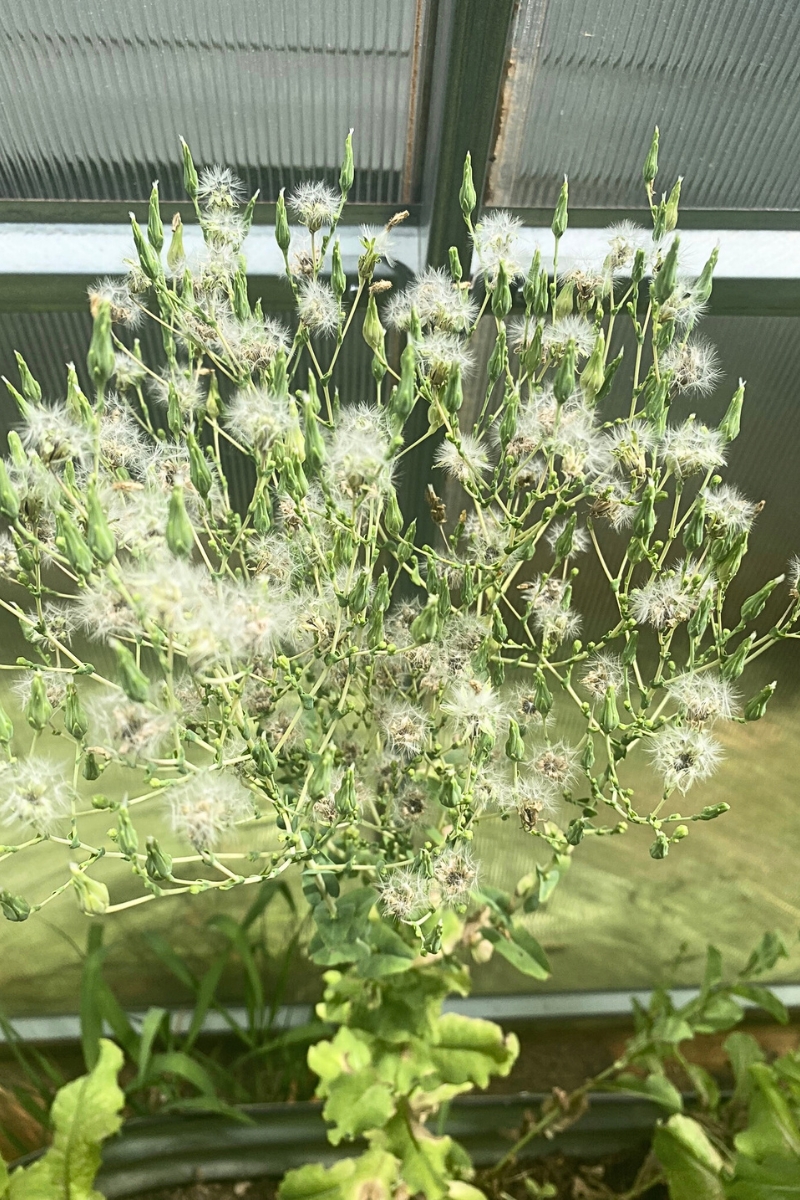
Once flowers finish blooming, lettuce forms seed heads that look a lot like tiny dandelions.
You’ll start to see white, fluffy “feathers” appear. This is the clearest sign that seeds are mature and ready to harvest.
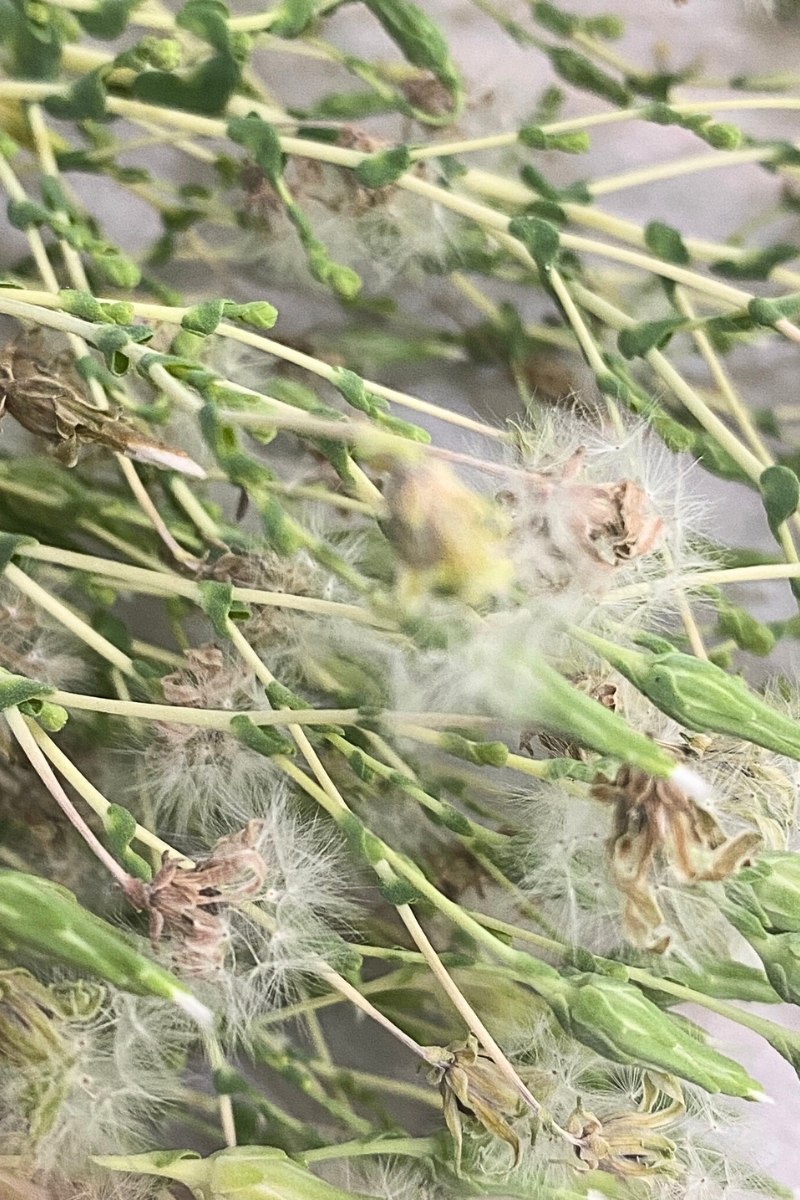
Not all seed heads ripen at the same time, so you’ll likely see some ready (ie. brown and drying) while others are still green.
Step 6: Harvest seeds a little at a time
Lettuce seeds are best harvested gradually as they mature.
One easy method is placing a paper bag over the seed heads and gently shaking. Mature seeds will fall into the bag, while immature ones stay on the plant.
You can also hand-harvest by plucking mature seed heads and gently rubbing them so the seeds fall into a container.
Harvesting before seeds fully blow away helps you save more.
Step 7: Dry the seeds completely
Even after harvesting, lettuce seeds need time to dry.
Spread seeds (along with some of the fluffy material) in a dry, airy place out of direct sunlight. Let them dry for at least a week or two.
This is an important step to keep mold off of your newly harvested seeds. Nothing is worse than opening a bag of seeds in a spring and finding moldy seeds!
Seeds are dry when they feel hard and snap rather than bend.
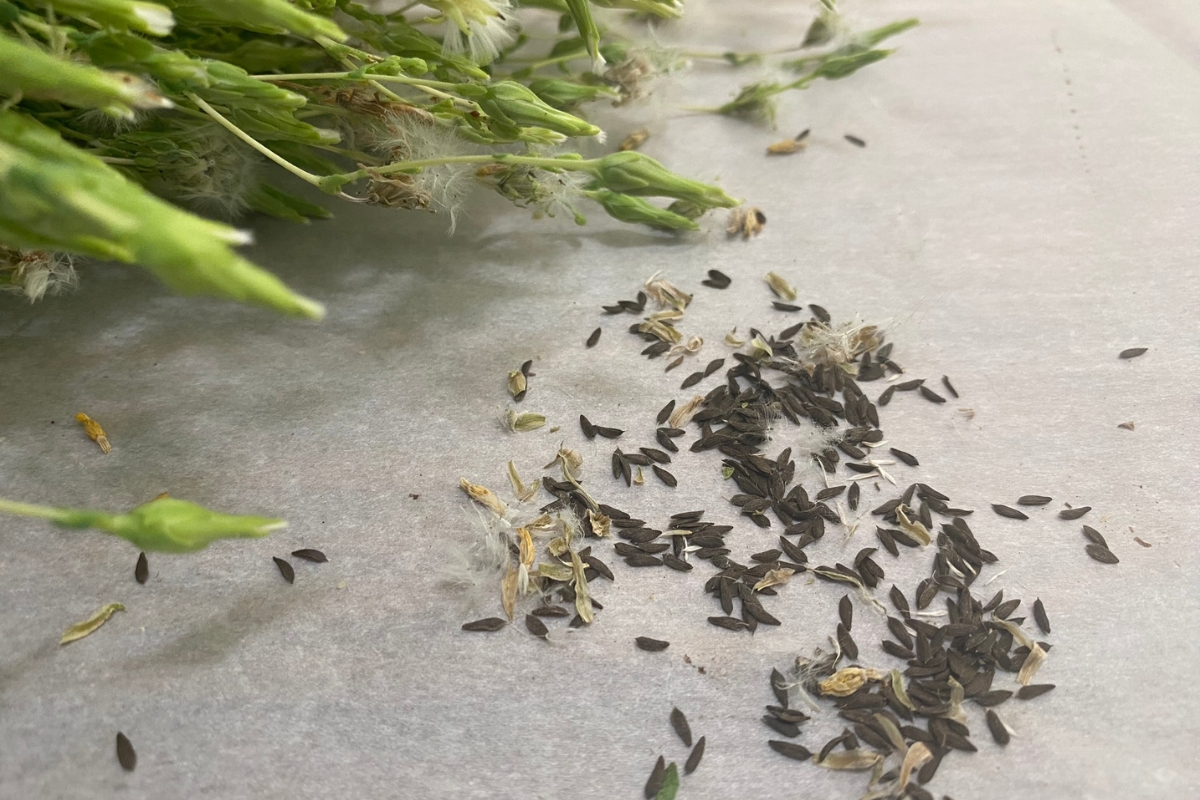
Step 8: Clean the seeds (keep it simple)
Lettuce seeds are very small and usually mixed with fluff and plant debris.
You can gently rub seeds between your hands to loosen debris, lightly blow away fluff, or pick out larger pieces by hand.
Your seeds do not need to be perfectly clean. Seeds stored with debris will still germinate just fine.
Step 9: Store and label your seeds
Once fully dry, store seeds in a paper envelope or a small airtight container. Even a plastic Ziplock bag will work just fine.
Label them with the lettuce variety (if you know it) and the year you saved them.
Store seeds in a cool, dry, dark place. Properly stored lettuce seed can last several years.
If there’s one thing to remember, it’s this: bolting isn’t a failure. If your lettuce bolts, you don’t have to pull it right away. Letting the plant finish its life cycle gives you free seeds for future gardens. If you grew the lettuce, you can save the seed.